Where AI genuinely helps
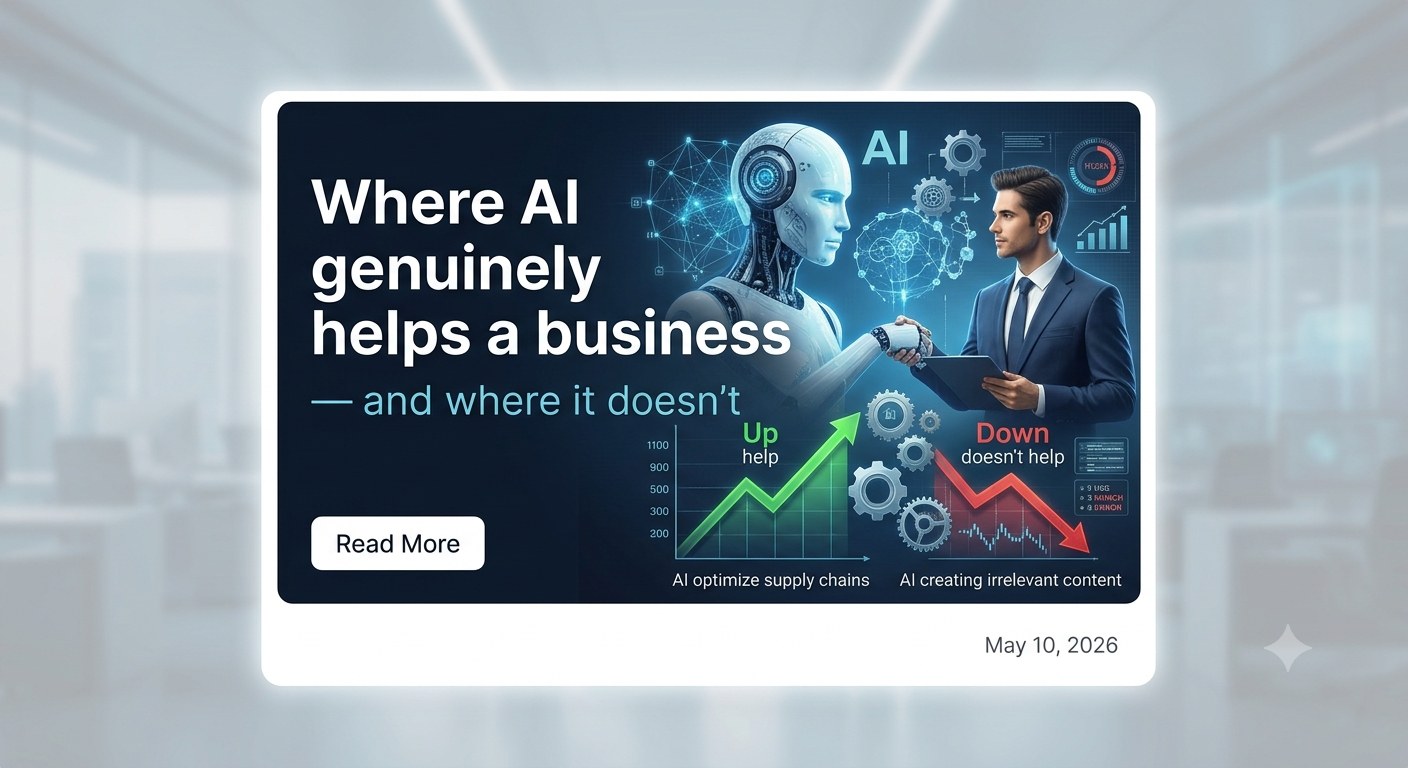
AI works best on work that is repetitive, text-heavy and easy for a person to check quickly.
- First drafts. Emails, product descriptions and reports that a person then edits
- Summaries. Long documents, meeting notes and customer feedback turned into a few clear points
- Sorting and routing. Support tickets and enquiries sent to the right team automatically
- Data entry. Pulling names, dates and amounts out of invoices and forms
- Finding answers. Searching across internal documents instead of asking a colleague
Where it doesn’t help
AI struggles when the answer must be exactly right, or when no one is accountable for checking it.
- Decisions with real consequences. Hiring, pricing, medical or legal calls still need a responsible person
- Mass-produced content. Hundreds of generic articles do not build trust, and readers and search engines can tell
- Unclear processes. Automating a messy workflow only produces mess faster
- Customer relationships. People want a real person when something has gone wrong
A simple test before you start
- Is the task repetitive and done often enough to matter?
- Can someone check the result in seconds?
- Is a mistake cheap to fix?
- Do we have clean data or documents for it to work from?
If the answer to most of these is yes, it is a good candidate. If not, fix the process first.
Start small and measure
Pick one task, run it for a month alongside the current method and compare time saved and error rates. If the numbers are good, expand. If not, you have spent very little to learn that.
Rule of thumb
Use AI to do the first 80% quickly, and keep a person responsible for the last 20%.
Key takeaways
- AI shines on repetitive, checkable, text-based work
- It is a poor fit for high-stakes decisions and unclear processes
- Keep a person in the loop for anything customers will see
- Pilot one task, measure it, then decide
AIAutomationBusinessStrategy